Thursday, 12 February 2015

Life Is Strange: Episode One

Life Is Strange: Episode One

The locales in Life Is Strange feel much less like rigidly framed theatrical scenes and more like real places

The kids in Life Is Strange are hella keen on youth slang. So much so, in fact, that they can barely get through a sentence without awkwardly inserting bare dollops of teenage argot. Occasionally this chimes cleverly with the game’s adolescent themes, such as when protagonist Maxine ‘Max’ Caulfield tries to be something she’s not in order to impress some skaters, and the dialogue is never anachronistic – nobody ever describes anything as ‘hip’. But for the most part, it just feels forced, the writers imposing their skewed perception of how young people speak onto voice actors who sound old enough to know better.

The Long Dark

The Long Dark

Hinterland’s painterly Canadian wilderness aims to reinvigorate the survival genre

Fiery watercolour skies and shimmering auroras are how Hinterland chooses to showcase its take on the end of the world, but even the most atmospheric screenshots can’t convey the sound of Canada’s deep north – the thunderous wind that scorns clothing and shakes window panes, or the thoughtful silence that follows fresh snowfall. Abstracting heavily, this Vancouver Islandbased team of 13 is creating an escapist’s game, and it’s one that achieves an even better sense of place than DayZ’s hyper-real countryside of Chernarus.

Wednesday, 11 February 2015

Ultimate Playstation Trivia Book. Vol. 9

Ultimate Playstation Trivia Book

We’ve gathered together over one thousand of the juiciest facts, figures and shocks from the world of playstation to educate your brain and tickle your funny bone. Topic 801-900.

801. It would cost you more than £2,000 to buy every Skylanders figure on the market.

802. At one point in Resident Evil 5, Chris Redfield’s parter was going to be Barry Burton instead of Sheva and some of his files still exist in the game.

803. Silent Hill’s school monsters had to be reworked four times before the game could be released in Europe. The original Grey Child enemies, naked knife-wielding children, were eventually replaced with the Mumblers who were meant to appear later.

Deeper Reading

text adventures

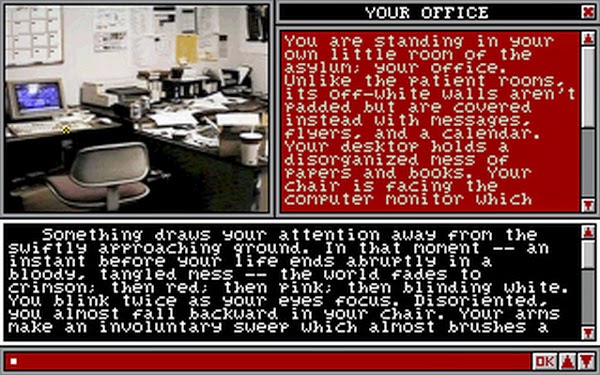
Classic adventure games, for all their archaisms, are about doing, not watching. In a medium frequently obsessed with the ability to replicate the tight focus and action climaxes of cinema, there’s something radical, even subversive about a genre that gives you so much to work with, so many ways to interact. By Joe Skrebels

So many ways to interact, in fact, that the thrust of the adventure genre – that videogame spaces can be toyed with as well as dashed through, that conversation can be a pleasure and reward in itself, that there are moments to miss – has become commonly overlooked, jettisoned in pursuit of more immediate pleasures as studios eschew increasingly expensive redundancy. And so modern games reductively trade story agency for commands to “Hold X to pay respects” at a funeral. Narratives have but one path. You read from the script, with the voice recorded by an actor, and express yourself in how the corpses pile up. This is not all gaming, not by any means – RPGs such as Dragon Age: Inquisition, The Witcher and Wasteland 2 provide one type of counterweight, while Thimbleweed Park, Broken Age and the remake of Grim Fandango are seeking to offer another – but it is a dominant trend.

Fable Legends: heavy on the magic

Fable Legends

Lionhead goes back to Albion’s roots to conjure up the most ambitious Fable ever. By Chris Schilling

This most quintessentially British of game worlds was no longer such a green and pleasant land. The Industrial Revolution had transformed Bowerstone into a factory town, all belching chimneys, filthy slums and open sewers – grim with one ‘m’ instead of two. While Lionhead’s reluctant to admit it, when it talks about trying to recapture the magic of Albion, it’s not just referring to taking Legends back to a time when Will users were more prevalent either. “It’s an opportunity to reset things, and try a new direction,” says studio director Stuart Whyte.